
Ellis County Court Record Requests
Start with Kansas CaseSearch to find a public district case and its case number. Write down the exact event or document title. Note its date too. If the public result offers a permitted document link, read it right there. If it does not, try the courthouse public terminal for older converted material. Or ask the Ellis County District Court Clerk. Ask whether the record is public, kiosk-only, paper, archived, or restricted.
Each route serves a purpose. Visit the counter, call 785-628-9415, or mail a specific request. You can also confirm details by email. The address is Ellis_Clerk_County@kscourts.gov. The office lists fax 785-628-8415. It does not say whether copy requests come by fax, so ask before sending. A KORA request can seek an existing public record. The secure drop box handles self-represented filings and fee envelopes. It is not for instant copies. Tybera eFlex is for authorized filing, not public record lookup.
- Find the full case number and exact document or event date.
- Check CaseSearch, then the public terminal for permitted older documents.
- Choose the counter, phone-confirmed mail, email, fax, or KORA route.
- Ask for plain, certified, or exemplified format and a current quote.
- Send payment only under the clerk’s current instructions.
Three Ellis Court Record Layers
A docket, a filed document, and a certified copy are three different products. The docket, or register, is the chronological index of events and settings in a case. A filed document backs one of those events. It may be the actual complaint, answer, motion, affidavit, notice, order, judgment, exhibit, or return. A certified copy comes last. It is a clerk-attested copy of whatever court record you select.
- Docket or register
- The dated list that helps locate what happened in the case.
- Filed document
- The actual public pleading, order, judgment, or notice behind an entry.
- Certified copy
- A copy formally attested by the clerk as a true court record.
- Transcript
- A separate record of spoken proceedings prepared through the court reporter.
CaseSearch itself warns that its information is not the official court record. A saved screen can help you spot an entry. It carries no clerk certification. When the exact language of an order matters, ask for the underlying signed document.
Kinds of Court Records
The Ellis district clerk keeps the court records for felony and other district criminal cases, civil and limited civil cases, domestic and family matters, probate and mental-health cases, juvenile matters, small claims, and state, KHP, or sheriff traffic cases assigned to district court. Municipal clerks are separate. City ordinance records stay with them.
- Docket sheets and public case-event registers.
- Complaints, petitions, answers, motions, notices, and returns.
- Signed orders, judgments, dismissals, and public dispositions.
- Available exhibits and attachments linked to filed papers.
- Certified copies of eligible documents or docket records.
- Transcripts requested separately from the court reporter.
Hays Municipal Court uses its own city document form. That form allows 72 business hours for processing, rejects incomplete submissions, and will not send records to a third party. None of those city rules set turnaround, fees, or form requirements for Ellis County District Court.
Ellis Court Records Clerk Counter
Ellis County runs on a single district clerk structure. Kayla Acosta is the Clerk of District Court II. She maintains the district register and filings at the 23rd Judicial District courthouse. No separate county clerk holds another district criminal, civil, probate, or family case file. A city ordinance record stays with that city's municipal clerk.
Ellis County District Court Clerk
107 W. 12th Street
Hays, KS 67601
785-628-9415
Fax: 785-628-8415
Bring the case number and the exact record you want. Ask at the counter whether identification is required, whether you can view the item there, and whether a plain, certified, or exemplified copy is available. The clerk publishes no Ellis-specific ID rule, no general copy turnaround, and no current fee schedule, so those answers come by asking directly.
Court Records: What They Contain
An Ellis County court case record can hold several layers that a public index never shows in full. What you can get depends on the case type, the date, eCourt conversion, your portal role, confidentiality law, and any specific court orders. Remember that an event line only locates material. It never substitutes for the filed document itself.
| Case identity | Court, case number, type, filing date, caption, judge, and public status. |
|---|---|
| Pleadings | Available petitions, complaints, answers, motions, affidavits, and notices. |
| Orders and judgments | Signed rulings, dismissal orders, sentences, judgments, or later relief. |
| Docket sheet | The chronological list of settings, filings, decisions, and later events. |
| Exhibits | Public attachments where filed and not restricted, sealed, or otherwise withheld. |
Ordering the docket sheet does not produce a transcript. For spoken proceedings, contact court reporter Lynelle Gottschalk and confirm the rate, deposit, and delivery. The Ellis page posts no transcript fee or turnaround, so get those numbers from her office before you commit.
Older Ellis Court Records
Kansas Judicial Branch guidance explains this. The public web portal and the courthouse terminal can expose different permitted material. A converted pre-Odyssey document may sit at the terminal. The online case view may show no link. The Ellis page publishes no local terminal count, identification rule, or usage fee. Ask the clerk about those details at the courthouse.
| Channel | Best use | Limit |
|---|---|---|
| CaseSearch | Public case index and permitted current documents. | Not the official record; document access varies. |
| Courthouse terminal | Additional permitted converted documents. | Nonpublic material remains unavailable. |
| Clerk file | Paper, archived, official, and certified records. | Access, retrieval, and cost require confirmation. |
If an older item is missing, give the clerk the historical number, the party or case caption, the approximate year, and the exact document type. A blank web result does not mean the record was destroyed. It does not mean the record is confidential either.
Copy Fees and Certification
A plain copy just reproduces an available record. A certified copy adds the clerk's attestation. An exemplified copy may be a different product, so confirm it with the clerk first. Name the exact judgment, order, docket sheet, or filing you need, then ask whether certification covers that item and its attachments.
| Item | Current Ellis amount |
|---|---|
| Plain copy or per-page charge | Not published; request a live quote. |
| Certified copy or certification | Not published; request a live quote. |
| Search or older-file retrieval | Not published; confirm before ordering. |
| Postage, fax, or other delivery | Not published; confirm the accepted method. |
K.S.A. 45-219 gives the copy-fee authority for public records. But neither Ellis County nor the 23st Judicial District posts a current local schedule. A neighboring district's prices are not Ellis prices, so do not rely on them. Before mailing any funds, ask for the full quote. Ask about the accepted payment form, postage, and the turnaround too.
Ellis Court Records KORA Form
A routine phone call to the clerk does not always unlock an Ellis County court record. Then there is a paper path. The Kansas Judicial Branch KORA form asks you to pick the county district court. Add your name, mailing address, city, state, ZIP, phone, fax, and email. You choose how the copies come back: email, mail, pickup at the counter, or fax.
Describe an existing file in the “Records Requested” box. Give enough detail that the clerk can actually find it. The form carries a commercial-use certification. It also has a signature and date line, and a cost-estimate section the office fills in. No fixed ID rule, fee, or deadline is printed on it. Remember the limits of KORA itself. The clerk does not have to build a new report or read a case for you.
A plain, narrow request to the clerk often settles a simple copy order faster. Save KORA for when a formal written record request truly fits. Never lean on it to get around a sealing order or confidentiality law.
Ellis Court Records Historical Context
Older Ellis County cases take some context to track down. The Kansas Historical Society Ellis County profile gives official county and city background. That helps with the digging. Its accompanying image maps the county and its population source. It is not a live court database.
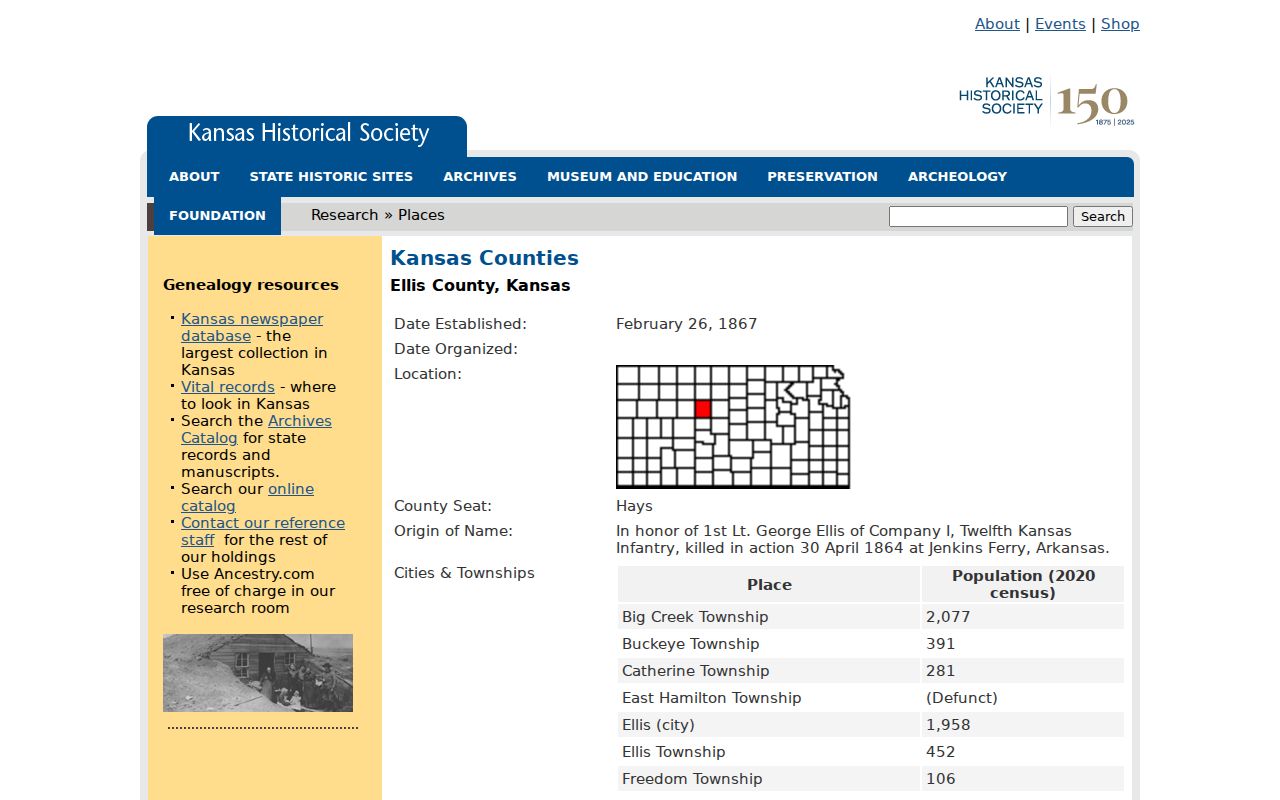
That profile helps you pin down the right place and era. The actual court file still sits with the Ellis clerk. Historical background cannot confirm that a case ever existed, and it is no stand-in for searching the archive itself.
Federal Versus Ellis Court Records
Federal files live somewhere else entirely. PACER, not the Ellis County clerk, handles them, and PACER’s official pricing page spells out its search and document charges. None of those numbers govern Ellis County District Court copy or certification fees.
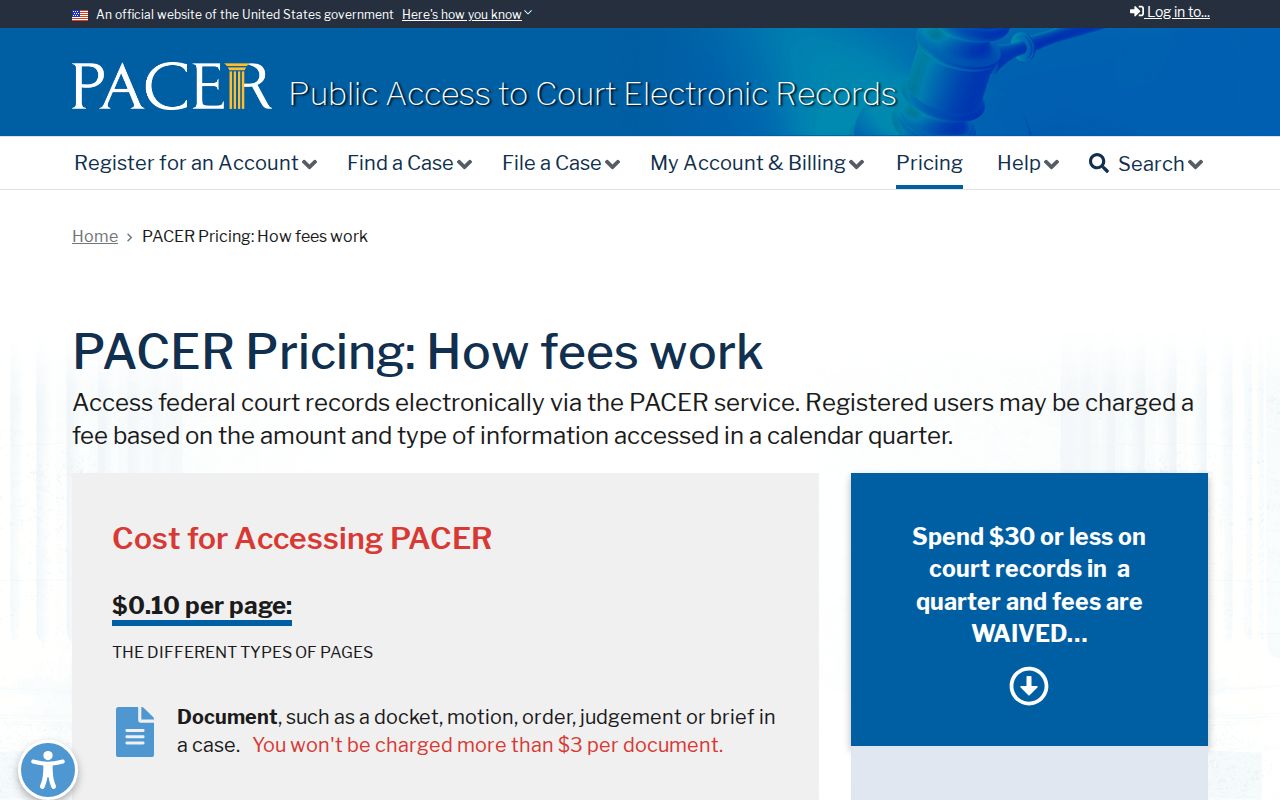
The comparison is worth holding in mind. A case filed in the U.S. District Court for the District of Kansas is federal. It runs through PACER. A state case in Ellis County runs through Kansas CaseSearch and the Ellis clerk. So confirm which court holds the case before you apply any portal’s rules or prices.
Access Rules for Court Records
Open to the public is not the same as open all the way through. A docket may sit behind restrictions you never see: sealed cases, expunged criminal records, adoption material, many juvenile or CINC records, grand-jury material, and protected investigations. On top of that, Kansas Supreme Court Rule 123 makes filers mask certain Social Security, birth-date, and account details.
Key rules:
Kansas Supreme Court Rule 22 governs public case-record information and authorized access systems.
K.S.A. 45-216 states the open-records policy unless an exception applies.
Kansas Supreme Court Rule 123 sets filing redaction duties.
Denied? Ask why, in plain terms. The item may be sealed, nonpublic by rule, held by a different office, or released only with authorization or a court order. Working around the limit through a city clerk or a sweeping KORA request is not a real option.